Events

The Path to a Sickle Cell ‘Miracle’

Cured by a team of Kaiser Permanente and City of Hope doctors, Donte Cofield will share his story at KPSOM (Part 2 of 2)

September 04, 2026

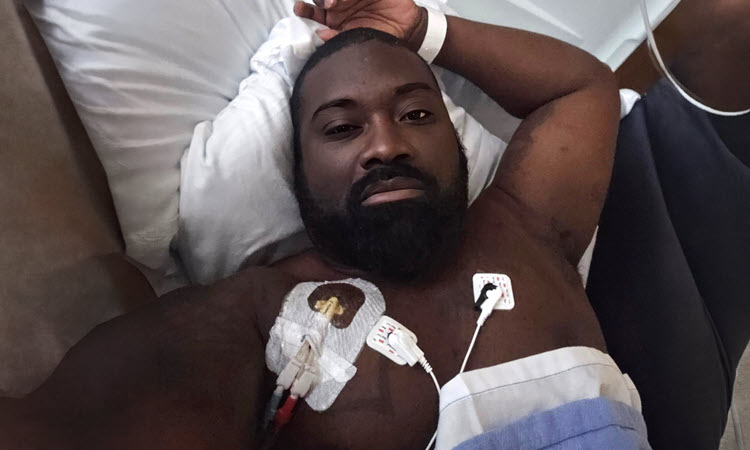
Donte Cofield during his hospital stay.

Donte Cofield during his hospital stay.

Donte Cofield learned about a possible cure for sickle cell disease (SCD) in an unconventional way: a Saturday Night Live skit featuring Keenan Thompson, who joked about a new breakthrough. After searching for more information, Cofield discovered the FDA had approved a stem cell treatment that removed a patient’s cells, modified them, and infused them back. His reaction: “Okay, so what do we do? Who's in charge of this? Like, put me in!”

Cofield is among a growing number of SCD patients in the U.S. experiencing dramatic turnarounds through gene therapy. To raise awareness of these developments, he will share his health journey — including his successful treatment by Kaiser Permanente and City of Hope specialists — during a September 9 panel discussion at Kaiser Permanente Bernard J. Tyson School of Medicine (KPSOM). 

As he dug deeper, Cofield learned patients had to be between 14 and 35 to qualify. At 34, he felt new urgency. “I need to get [the treatment],” he thought. “We need to get this in gear … we’ve only got a few months.”

Cofield was referred to Osbourne Arthur Blake, MD, Program Director of the Kaiser Permanente Sickle Cell Center of Excellence in Inglewood, who explained the treatment and its risks. Cofield initially preferred holistic care and was wary of chemotherapy. But after talking with his wife and relatives in the medical field, he decided the risks were worth the possibility of life without constant pain and IV drips.

Two things surprised him: Medi-Cal would cover treatment, and fertility could be affected. Already parents of two, including a daughter who also has SCD, Cofield and his wife discussed whether they still wanted a third child. They later learned she was pregnant while he was six months into treatment. Their son was born a month after Cofield was cured — a timing they felt “was meant to be.” Dr. Blake’s reassurance that his team would care for Cofield regardless of the risks added another layer of confidence.
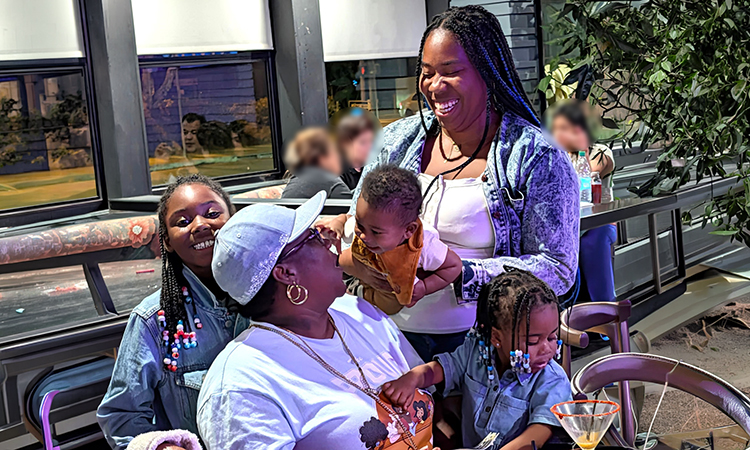
Donte Cofield’s mother, wife, and children

Donte Cofield’s mother, wife, and children

Novel Stem Cell Procedure

As Cofield weighed the complex, still-new therapy, members of his Kaiser Permanente Sickle Cell Center of Excellence care team helped him understand the process, risks, and potential impact on his life. The team included Resa Caivano, MD, MPH, FAAP, one of Cofield’s physicians and a KPSOM Associate Professor of Health Systems Science; Dr. Blake; Diane Batham, NP, a Kaiser Permanente nurse practitioner specializing in pediatrics-hematology/oncology; and others.

After the collection of stem cells at City of Hope in April and May 2025, Cofield received high dose chemotherapy and an infusion of gene modified cells in November 2025. Because the Kaiser Permanente and City of Hope teams had performed the procedure only once before, on a pediatric patient, his physician, Pamela Becker, MD, PhD, a City of Hope hematologist and Director of Adult Commercial Gene Therapy, trained adult nursing professional staff to assist. Approximately three weeks after cell infusion, Cofield’s blood counts began to recover from the gene modified cells, and he was discharged back home. 

Drug-seeking vs. Relief-seeking

Although Cofield has been cured, he continues to advocate for people with SCD who often face misunderstanding, especially when seeking pain relief and being labeled drug-seeking. He experienced this when he sought care outside Kaiser Permanente.

“When I was inside the Kaiser [Permanente] network, they understood completely, because they had my medical records,” Cofield said. Out of network, he said clinicians often offered only a milligram of morphine, leaving him in pain and under scrutiny. He compared it to an episode of HBO’s The Pitt, in which an ER team labels a sickle cell patient “drug-seeking” because they are uncomfortable administering higher doses of pain medication.

“I've met doctors that [said], ‘No, I'm not comfortable giving you this level. I'm gonna refer you to your team because I don't give that level of medication to anybody,’” Cofield said. His response: “I’m not comfortable being in pain. If I've been on morphine since I was [age] 7, obviously two milligrams of morphine [will do nothing as my] tolerance went up [over time].”

During an unplanned hospital visit while vacationing, Cofield contacted Elaine Smith, MD, a pediatric hematologist and former director of pediatrics at Kaiser Permanente West Los Angeles. He called the hospital visit “the worst experience of [his] life,” saying the staff did not understand SCD or its pain. Dr. Smith helped explain to the medical staff what was needed to stabilize him beyond IV fluids and blood transfusions.

Cofield asked to speak with someone more knowledgeable once he realized the staff did not understand SCD. They were surprised by how much he knew about his care — IV fluids, pain medications, dosages, hemoglobin levels, and more. He wanted to be honest about his pain but felt dismissed and suspected staff saw him as drug-seeking.

“I was not used to the lack of information … I didn't know people didn't know what this [disease] was, because … my life revolved around [sickle cell disease],” Cofield said. “It felt like not knowing what cancer was.”

Cofield said others in his sickle cell support group share similar frustrations, including physicians opening with, “How long have you had [sickle cell disease]?” Because patients inherit SCD at birth, the question signals unfamiliarity and often prompts patients to ask for another doctor.

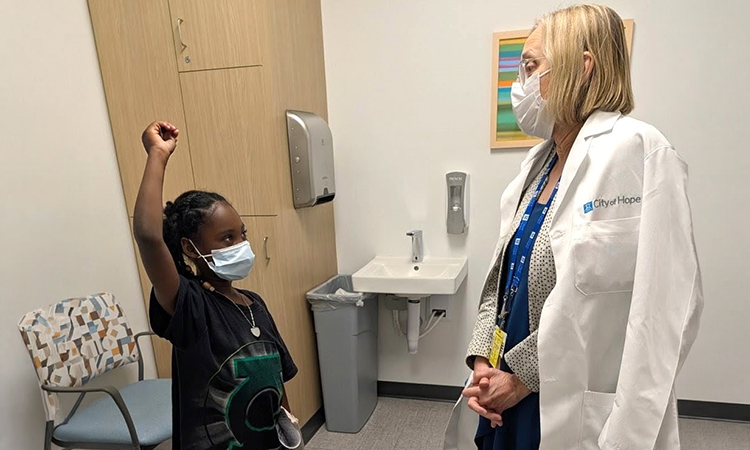
Dr. Pamela Becker (at right) shares a moment with Donte Cofield’s daughter

Dr. Pamela Becker (at right) shares a moment with Donte Cofield’s daughter

Spurring Blood Donation

For some SCD patients, IV fluids, medication, and other standard treatments are not enough, making blood transfusions essential. According to the American Red Cross , people with SCD may need as many as 100 units of blood each year. Cofield said transfusions replace sickled cells with healthy ones, and some patients need blood from a closely matched donor of similar ethnic background. Because SCD overwhelmingly affects Black people, blood donation within the Black community is vital. “[It’s] literally lifesaving,” he said.

Increasing Awareness of Sickle Cell Disease

Care at the Sickle Cell Center for Excellence has helped Cofield better understand and manage care for himself and his daughter. The award-winning program provides comprehensive, culturally sensitive care and serves as a model for SCD treatment.

His journey also underscored the need for greater awareness. He had attended SCD-related camps as a child and participated in health awareness events, yet had never heard of Sickle Cell Awareness Month, observed in September.

“I’ve had this [disease] for 35 years,” he thought. “How have I not known about this?”

The KPSOM event, “Sickle Cell Awareness and Education,” will take place September 9 from 6 to 8 p.m. and include a reception and panel discussion moderated by Dr. Caivano. Cofield will share his experience as a sickle cell survivor alongside Batham; Jerry Cheng, MD, a pediatric hematologist-oncologist specializing in pediatric bone marrow transplants and KPSOM Clinical Professor of Clinical Science; and Lisa Mueller, MD, a Kaiser Permanente pediatric hematology/oncology specialist and KPSOM Clinical Associate Professor of Clinical Science, who will all highlight their work in SCD care. Those interested in the panel discussion  are invited to tune in virtually on September 9 at 7 pm via Zoom.