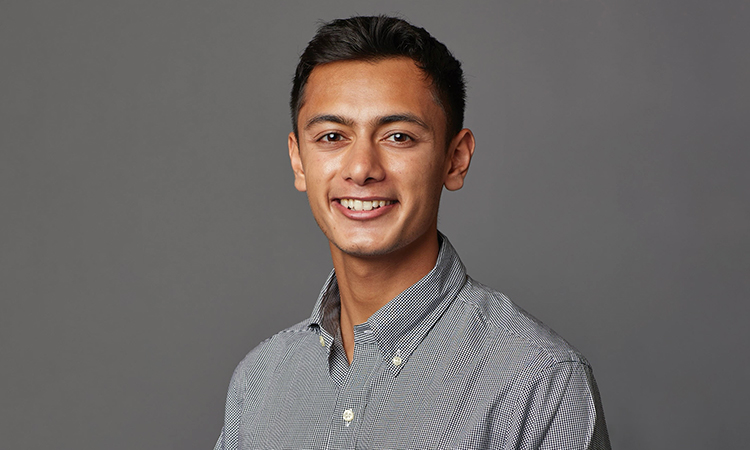
Nepal’s National Health Insurance Program (NHIP), launched to fulfill constitutional health rights with universal coverage and equity principles, has faced critical challenges including flat premiums, lack of income-based scaling, poor enforcement of mandatory enrollment, governance issues, unpaid hospital claims, and quality of care concerns. In an article published in Himal Khabar (translated in Nepali) and subsequently published in the Nepali Times (in English), Kaiser Permanente Bernard J. Tyson School of Medicine (KPSOM) student Barune Thapa details the history of the program and its failings.
The shortcomings associated with NHIP have led to a crisis in which major hospitals have suspended services and patients face high out-of-pocket expenses. Many experts recommend activating income-based premiums, increasing coverage limits, enforcing mandatory enrollment, consolidating schemes, and restructuring governance to ensure sustainable universal health coverage within the country.
Thapa recently participated in KPSOM’s global health rotation in Dhulikhel, Nepal. In the following interview, which was lightly edited for length and clarity, he shared his view of universal healthcare and the history of the NHIP.
What motivated you to pen this long-form investigative article?
It is my strong belief that healthcare is a right, not a privilege. Nepal is a low-income country that, despite a history of austerity and privatization of the healthcare market due to global influence, has had a strong movement toward universal healthcare. Right now, this system is in crisis. While the core ideas that would allow provision of universal healthcare are all present, their implementation by policymakers has been very poor, and this has led to a financial crisis that is collapsing the system.
When I was in Nepal this winter for my global health rotation at Dhulikhel Hospital, a place I have worked closely with for the past 12 years, the national health insurance program crisis came up in many conversations, whether with physician administrators talking about the financial tolls on hospitals, doctors talking about the impact on what they can prescribe, or patients talking about how they haven't been able to access healthcare. There was a lot of confusion about what was going on and why the system was collapsing. With my background in how healthcare systems work from graduate school at Harvard School of Public Health, I had a good grasp of where things had gone wrong and wanted to write a piece explaining what was happening.
There were also many perspectives from health experts that hadn't been publicized in one unified source. For example, Shambhu Acharya, who has worked with the World Health Organization (WHO) for many years and led the health insurance reform task force for Nepal, had so much knowledge and important perspective that was published in a task force report but not necessarily accessible to a wider Nepali audience. I thought it would be valuable to create one piece that brings together the knowledge of all of these people, written by someone with the background to put it all together. In a low-income country experiencing severe brain drain, I feel it is part of my responsibility to contribute to the advancement of Nepal as a person of Nepali origin having been born, raised, and educated in the U.S. When I learned that Himal Khabar was looking for someone to write on this topic, I took it on and wrote the piece for both Himal Khabar and the Nepali Times.
How has your background and interest in global health studies influenced your interest in exploring the history and setbacks involved in bringing universal health to Nepal?
The global economic system, as it stands, does not ensure healthcare to the poor and marginalized, and their marginalization is a direct effect of extractive economic systems. A part of this extraction has been the implementation of austerity measures throughout the global south, leading to very poor provision of quality healthcare. My background at Dhulikhel Hospital and my work in global health have educated me about the importance of universal health coverage in this context.
My ethnographic work in Nepal during my Harvard Sheldon fellowship in 2021 showed me how folks in rural Nepal have been left out of the healthcare system. Prohibitive costs prevent many from accessing care in the private system, and when people have emergencies, because there is no proper health insurance system that covers them, they end up in debt that devastates them for generations when they are already poor. Being a part of the Dhulikhel Hospital community and involved in public health for a long time has given me access to the insights and contacts to make writing this article possible.
It's important to have longitudinal relationships in global health, to build upon what you learn from and continue to contribute to the communities you learn from. Writing an article like this is a part of that contribution, and it can only really happen after longitudinal and deep engagement with a community.
Has your more recent involvement in KPSOM’s global health initiatives changed your outlook on universal healthcare and/or the importance of health insurance globally? How so?
KPSOM gave me the opportunity to do a global health rotation in Nepal, and it was during that time at Dhulikhel Hospital that many of the conversations around the Nepal Health Insurance Program crisis took place. The resources and support from the Kaiser Permanente Global Health Office to be able to do this rotation were essential. I think the intersection of being a final-year medical student with an understanding of how a healthcare system works from a physician perspective, along with my background in public health from my time in Nepal and my Masters in Global Health and Population from Harvard, gave me a unique perspective to take on writing this article. I also worked with Dr. Jeffrey Brettler [KPSOM Faculty Director of Global Health and Associate Professor of Clinical Science] to create my own Health Systems Science course, "Structural Determinants of Health in Nepal," which gave me dedicated time to conduct the interviews, research, and writing for this article, as well as to continue my ethnographic research on the recreation of poverty through microfinance in rural Nepal.