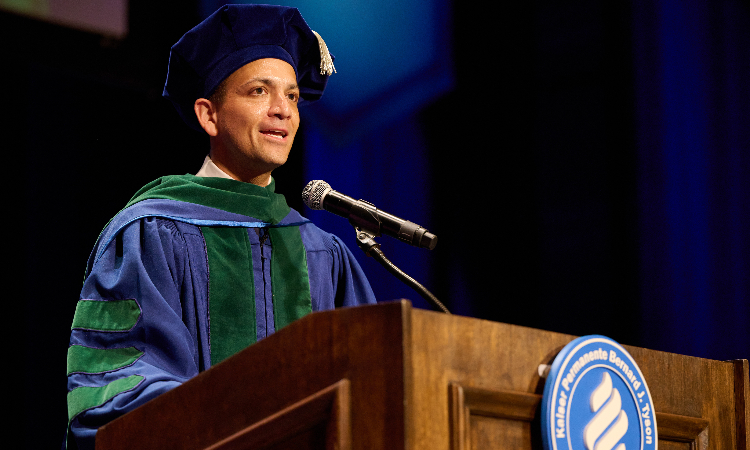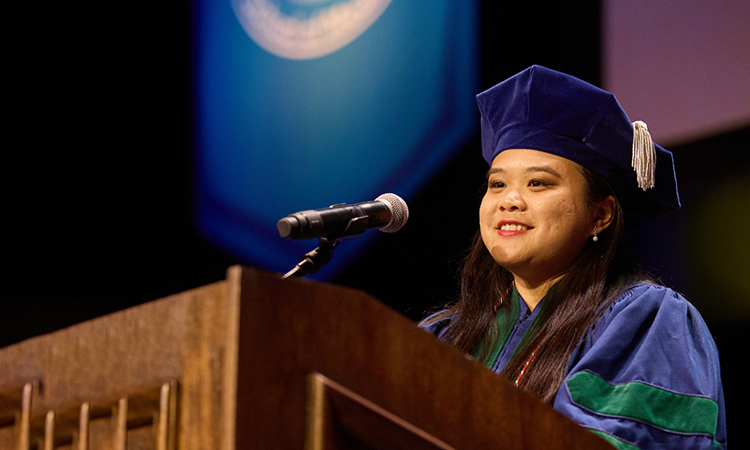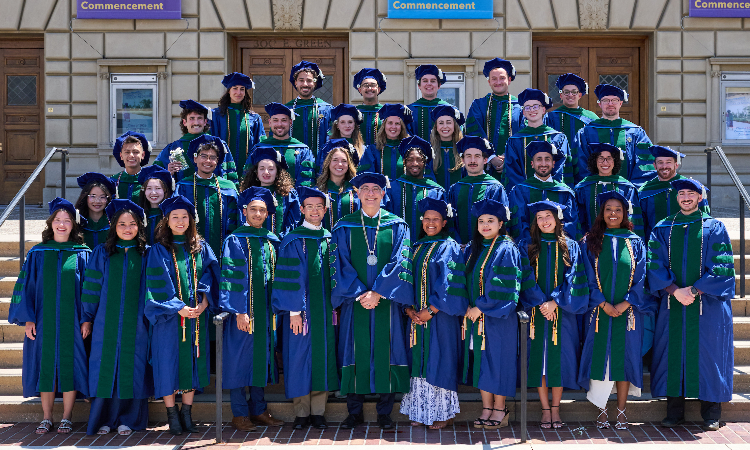
Kaiser Permanente Bernard J. Tyson School of Medicine (KPSOM) celebrated its third-ever commencement ceremony on May 11, a landmark moment in which 36 graduating members of the Class of 2026 received the Doctor of Medicine degree. Held at the historic Pasadena Civic Auditorium, the program blended academic tradition, personal reflection, and a call to service as speakers emphasized both the profound privilege, enduring responsibility, and unprecedented challenges associated with becoming a doctor at a pivotal time for the medical profession.
“You are entering medicine at a time of enormous possibility,” said commencement keynote speaker Vin Gupta, MD, MPA. “Science is advancing faster than at any point in human history. Technology is transforming how we diagnose, treat, and even think about disease. And at the same time, trust in the very foundations of our proud profession has become fragile. Public confidence in institutions, especially ours, is being tested. Information moves faster than evidence. And the line between truth and noise has become harder to see. So, the question for you isn’t just ‘What will you practice?’ but ‘What will you carry?’”
With faculty, staff, families, and friends in attendance, the evening ceremony highlighted the significance of the third graduating class in the ongoing story of KPSOM, which opened its doors in 2020 with a mission to train physicians for the fast-evolving landscape of 21st century medicine. KPSOM board member Anthony Iton, MD, JD, MPH, welcomed guests and underscored the importance of the milestone, noting that it belonged not only to the graduates but to a broad community that helped make their achievement possible. “This moment stands on the shoulders of many,” he said, thanking students, staff, faculty, community partners, Permanente leaders, and KPSOM board members.
KPSOM Dean and CEO John L. Dalrymple, MD, framed the ceremony as both a culmination and a beginning, recalling his own medical school graduation and describing commencement as “simultaneously thrilling and yet scary” as students step into life as physicians. “How many hours have you poured into studying?” Dalrymple asked. “How many patient notes have you written? How long have you waited to earn the letters ‘MD’ behind your names?
“The wait is over,” Dalrymple told the graduates. “Your time has come.”
As one of KPSOM’s initial cohorts, the Class of 2026 helped shape the school from the ground up, Dalrymple noted. “When you began your journeys at KPSOM, you were stepping into something still taking shape: only 150 students comprising the three inaugural classes, a novel curriculum that was still being developed and implemented anew, and construction crews still putting finishing touches on the building.” From the beginning, students held two roles: as medical students and as “builders of the school,” he said.
“This school carries your imprint, in every space, every phase, and every expectation of what it means to be a KPSOM student,” Dalrymple continued. “As one of the founding classes, you didn’t just move through this institution. You helped shape it.” The graduates’ work is now part of a legacy that will benefit future learners at KPSOM and beyond, the Dean noted.