Kaiser Permanente Bernard J. Tyson School of Medicine (KPSOM) recently dedicated a week to “Integrative and Cross-Cultural Medicine,” giving medical students a rare opportunity to engage deeply with alternative and traditional healing practices alongside conventional Western medicine. Over two half-day sessions, students met physicians, healers, and scholars who invited them to reconsider what counts as knowledge in medicine and how patients’ cultural and spiritual lives shape their experiences of care.
The integrative week was part of Phase 3 of the REACH (Reflection, Education, Assessment, Coaching, and Health and well-being) course, which all KPSOM students complete. Organizers designed the program “to historicize and situate allopathic medicine within a larger context of indigenous, cultural, and what are commonly seen as alternative healing methodologies,” emphasizing humility rather than critique.
“The REACH sessions showed me there is so much more to healing than Western medicine,” student Destiny Rochester said. “There are so many medicinal uses of alternative medicine; whether its herbal remedies rooted in using the Earth’s natural healing qualities or acupuncture that for many can treat a pain traditional medicine otherwise couldn’t. I have always found value in exploring the ways patients’ culture shape their experiences of care, but this week really challenged me to not just ask but go a step further and educate myself on these practices.”
The sessions included a lecture by faculty member Sylvia Vetrone, PhD, Associate Professor of Biomedical Science, who asked students to wrestle with a deceptively simple question: “What is knowledge, and how do we determine that what we know is knowledge?” She contrasted “traditional or indigenous” knowledge rooted in community, environment, and lived experience with “Western, conventional” knowledge taught in classrooms and laboratories, arguing that both are built through similar habits of mind, observation, and experimentation.
Dr. Vetrone urged students to recognize that “everyone is a knowledge maker,” including elders, healers, and patients whose remedies have been refined across generations. Sharing her own ethnopharmacology research on Essiac, an herbal blend used in Ojibwe tradition and among cancer patients, she described how her rigorously designed study showed promising effects on lifespan, oxidative stress, and cancer cell proliferation, yet struggled to find acceptance in mainstream journals, revealing “the value placement” problem that often sidelines traditional medicine.
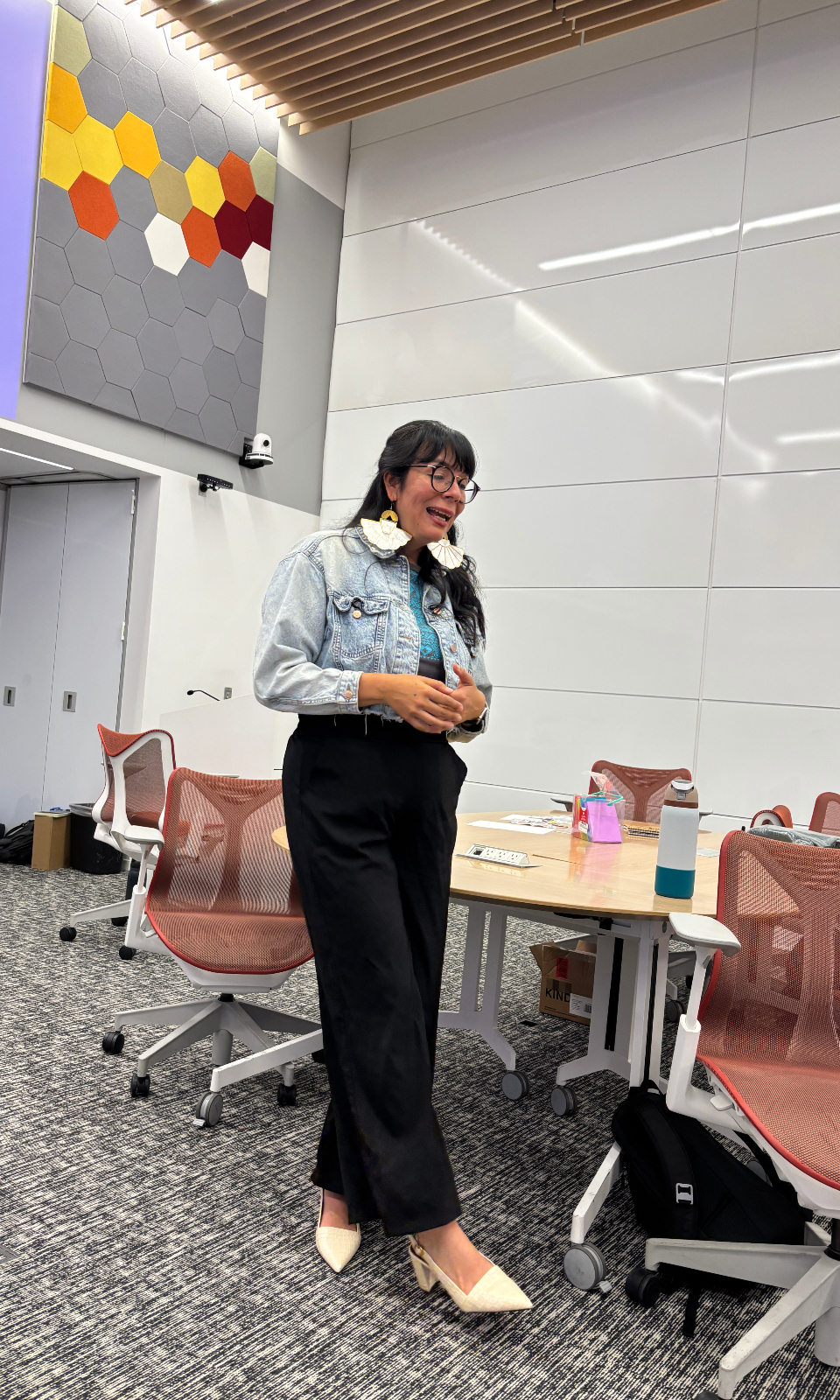
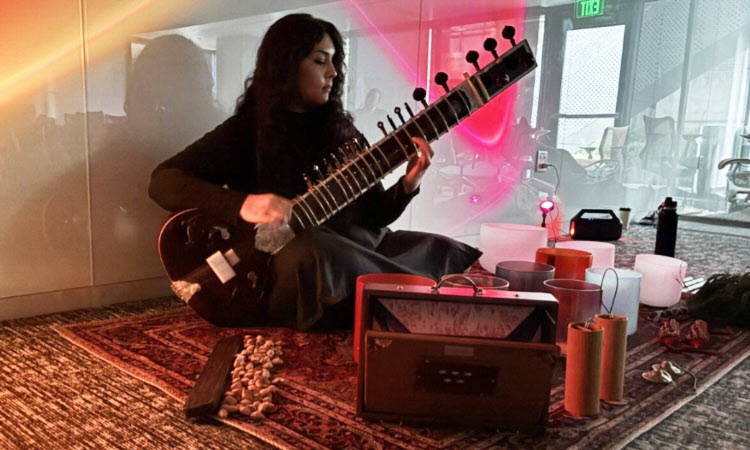
In pre-session materials, students were asked to reflect on how to make clinical spaces safe for patients to disclose cultural or spiritual healing practices, how to address distrust of physicians in some communities, and how to manage their own skepticism toward methods that “fall outside of allopathic medicine.” Over the two afternoons, students rotated through panels and “deep dive” sessions on integrative medicine, Ayurvedic practice, Traditional Chinese Medicine, Meso-American birthwork, sound healing, and African American ancestral healing.
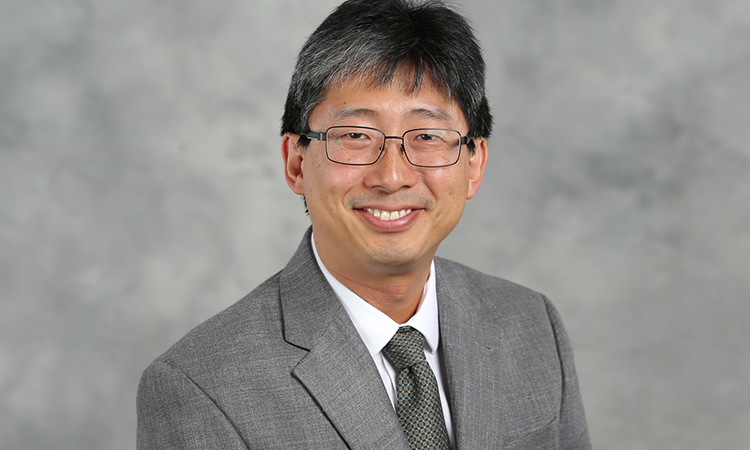
On the second day’s panel, family physician and Chinese medicine practitioner Brian-Linh Nguyen, MD, MBA, MTOM, Assistant Professor of Clinical Science, shared his journey from UCLA medical training to a four-year master’s program in Chinese medicine, inspired in part by a grandfather who had been a renowned herbalist in Vietnam. As a resident, he spent Saturdays in an acupuncture clinic and discovered “as much bias in Chinese medicine as there is in Western medicine,” he said, hearing students there criticize physicians for “poisoning their patients” just as Western clinicians sometimes dismiss herbs and acupuncture.
Dr. Nguyen encouraged students to practice “dialectical thinking” when encountering unfamiliar healing systems, asking where “common ground” might exist between divergent paradigms. He pointed to familiar examples, such as perilla leaves with sushi, turmeric for inflammation, as places where food, culture, and pharmacology intersect, and argued that Western medicine “can be very holistic, if that’s how you approach it,” especially when clinicians attend not only to body and mind but also to patients’ spiritual needs without conflating spirituality with religion, he said.