Events

Spotlighting a Sickle Cell Cure, and the Work Ahead

Panel featuring the first adult in Los Angeles County cured of sickle cell disease reflects KPSOM's mission to advance health equity for underserved communities

September 14, 2026

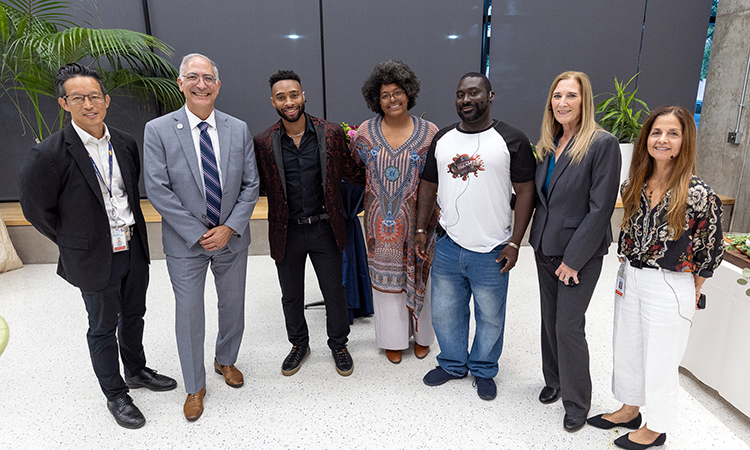
(L-R) Dr. Jerry Cheng; Dean John L. Dalrymple, MD; KPSOM student Zach Rouseau; Dr. Resa Caivano; sickle cell survivor Donte Cofield; Diane Batham, and Dr. Lisa Mueller

(L-R) Dr. Jerry Cheng; Dean John L. Dalrymple, MD; KPSOM student Zach Rouseau; Dr. Resa Caivano; sickle cell survivor Donte Cofield; Diane Batham, and Dr. Lisa Mueller 

Donte Cofield spent more than three decades believing he might die at any time. On the evening of September 9, he stood before a packed audience at Kaiser Permanente Bernard J. Tyson School of Medicine (KPSOM) as living proof of what has changed.

Cofield, a 36-year-old husband, father of three, and mechanic, is the first adult in Los Angeles County cured of sickle cell disease (SCD) through an innovative stem cell procedure made possible through a collaboration between Kaiser Permanente's Sickle Cell Center of Excellence and City of Hope. He was a featured guest at “Sickle Cell Awareness and Education,” an evening reception and panel discussion hosted by the KPSOM Office of Advancement that brought together clinicians, students, staff, and community members to mark National Sickle Cell Awareness Month.

“I've made video messages and postdated them for my kids’ birthdays that I didn't think I was going to make it to,” Cofield said. He provided advice for his eldest daughter when she was six years old for her 16th birthday explaining, "Hey, in case I'm not here, this is life advice I want to give you because I might not see you get to this age.” And when Jerry Cheng, MD, KPSOM Clinical Professor of Clinical Science, pediatric hematologist-oncologist, and Chief of Pediatrics for Kaiser Permanente Los Angeles Medical Center, told Cofield he would be here to raise his kids, Cofield said, “I'm down. I'll take any treatment you got.’”

Sickle cell disease is an inherited blood disorder that distorts red blood cells into a rigid, crescent shape that can block blood flow, starve tissue of oxygen, and trigger excruciating pain crises. It affects more than 100,000 people in the United States and disproportionately impacts African American individuals. 

For most of his life, Cofield described his pain as being “constantly hit with a hammer every time your heart beats.” He was placed on morphine as a child, then cycled through multiple hospitalizations. As a teenager, he assumed “I ain't gonna be here that much longer,” a fatalism that fueled reckless choices in his youth, he said. That changed after Cofield learned about a newly FDA-approved gene therapy in an unlikely way: a “Saturday Night Live” sketch joking about the breakthrough. At Kaiser Permanente's Sickle Cell Center of Excellence, he underwent a roughly 10-month treatment process, including monthly blood exchanges and a lengthy hospital stay that concluded last December. He has not needed so much as an ibuprofen since, he said.

“I've never felt so much gratitude take over my life because I didn't expect to live to the age of 35, let alone be cured,” Cofield told the audience. “I'd lost hope in a cure a long time ago, and to be the first adult in the area to be cured is a prayer I never expected to be answered.”

Building trust, building systems

Cofield's cure did not happen in isolation. In the KPSOM panel discussion, clinicians described decades of relationship-building and the newly built clinical infrastructure that made the moment possible.

Diane Batham, RN, MSN, CPNP-PC, a pediatric nurse practitioner who has cared for sickle cell patients for nearly 40 years at Kaiser Permanente's Downey Sickle Cell/Hemoglobinopathy Center, has known Cofield since he was three weeks old. “I'm on your side,” she said, describing her approach to patients and families. “That's establishing that trust that we're like family.” Two of Cofield's children have sickle cell disease and another inherited the trait, and today, Batham is now their nurse practitioner as well.

“Once we got wind that there was an interest to invest in the care of sickle cell patients the last few years, beyond just stem cell transplants, we really created a strategic collaboration with City of Hope,” said Cheng, who helped broker the partnership that has made adult gene therapy possible within Kaiser Permanente Southern California. “The science in Kaiser Permanente is amazing because we have full line-of-sight on all our members with chronic disease. We have over 950 sickle cell patients insured by Kaiser Permanente; we have two Centers of Excellence … So, we have a process, we have a structure, we have a strategy, and that was the only reason we're able to do things like this. 

“I'm proud to say, Donte is one of seven patients we've infused this year,” Cheng said. “Most activated treatment centers are not even doing close to that number at this point.”
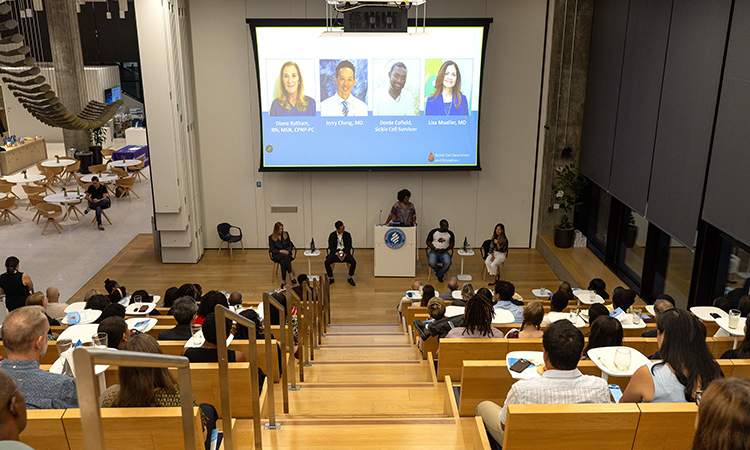
Event panelists Diane Batham, Dr. Jerry Cheng, Dr. Resa Caivano (moderator), sickle cell survivor Donte Cofield, and Dr. Lisa Mueller discuss sickle cell treatment options and patients’ lived experiences

Event panelists Diane Batham, Dr. Jerry Cheng, Dr. Resa Caivano (moderator), sickle cell survivor Donte Cofield, and Dr. Lisa Mueller discuss sickle cell treatment options and patients’ lived experiences

Two FDA-approved therapies are now in use: one that uses CRISPR gene-editing technology to boost fetal hemoglobin, and one that uses a gene-addition approach, with eligibility now spanning ages 2 to 40, Cheng said, up from the narrower window that nearly excluded Cofield. Panelists also addressed a leading reason patients decline treatment: the risk of infertility from pre-treatment chemotherapy. Cheng noted that California's Medi-Cal and commercial insurance plans, through partnerships with City of Hope and other centers, now cover fertility preservation, including egg, ovarian, and testicular tissue harvesting, even for prepubertal patients.

Lisa Mueller, MD, a KPSOM Clinical Associate Professor of Clinical Science and pediatric hematologist-oncologist, spoke to the psychological toll sickle cell pain crises take on both patients and care teams. “These children come in, and nobody [has ever seen] children in this amount of pain,” she said, describing the importance of believing patients and building trust at the bedside before anything else.

Asked how the health system can reach more patients earlier, especially in underserved parts of Los Angeles, Batham pointed to deeper partnership with community organizations such as the Sickle Cell Disease Foundation of California and its community health workers. “It's being able to reach out beyond our walls, beyond our medical centers,” she said. “Unless we go out to do it, it's not going to get done.”

A call to action

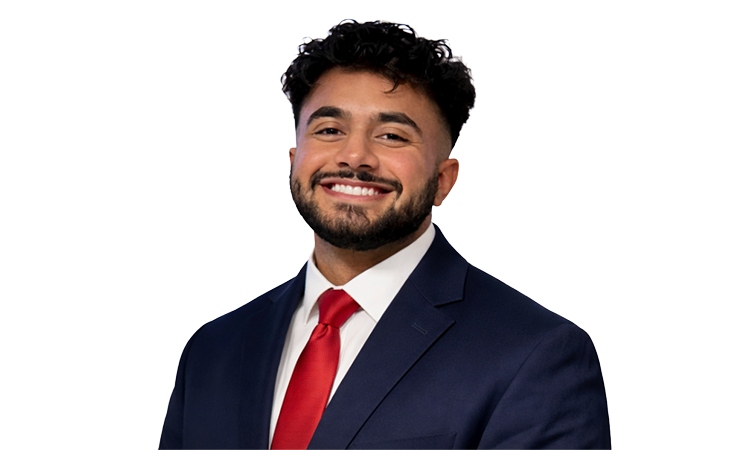
The evening opened with remarks from KPSOM Dean and CEO John L. Dalrymple, MD, and a presentation from KPSOM student Zachary Rouseau, who founded Blood For Change, an American Red Cross-affiliated initiative that has mobilized 1,600 blood donations and reached 50,000 young people with sickle cell education. Rouseau's connection to the disease is personal: a cousin with a rare reaction to sickle cell trait, and a brother who lives with hemoglobin C.

“I hope people can learn what sickle cell disease is if they're not already familiar,” Rouseau said in an interview before the event, “and then be able to take that a step further ... to have a call to action, join and donate blood for a sickle cell blood drive.” Because many patients with sickle cell disease rely on regular, closely matched blood transfusions, Kaiser Permanente and KPSOM are hosting a blood drive with the American Red Cross on October 20.

Elizabeth Weinberg, MPA, KPSOM Senior Director of Development, said the event grew out of a conversation she and Rouseau had during a prior campus blood drive sponsored by the American Red Cross on October 20.

"He educated me about sickle cell disease," Weinberg said. "Then Zach and I decided to partner on an event to raise awareness about a disease that affects many people who do not always receive the care they need, often because there is limited understanding of the disease. It also aligns with our philosophy of bringing as many people as possible to KPSOM to experience the beauty of the school, the kaleidoscopic nature of our community, and the wonderful relationships our students have with faculty. We wanted to create an opportunity to raise awareness while showcasing the school and its mission."

For Dalrymple, the evening captured something essential about the school's identity. “This event represents a culmination of all the things that are important to us as a school,” he said in an interview beforehand. “It's our commitment to health equity. It's our commitment to community engagement. It's our commitment to medical education.” He noted that KPSOM was the first medical school in the nation to elevate health systems science alongside biomedical and clinical science as a foundational pillar of physician training. Students are trained, he said, not only to treat individual patients but to help build a healthcare system “that works for everyone.”

That mission carries particular weight for a disease that disproportionately burdens African American communities and has long been underresourced relative to its severity. Panel moderator Resa Caivano, MD, MPH, FAAP, one of Cofield’s physicians and a KPSOM Associate Professor of Health Systems Science, said she hopes attendees “feel inspired by what happens when you give somebody a second chance at life” and are moved “to support continued research and efforts so that more people can benefit from this cure.” She added that sickle cell disease is woven into KPSOM's hematology curriculum and, more broadly, into the school's focus on health disparities. “There's opportunity to bring light to places where we can make change,” she said.

Dalrymple said he hopes the event is one of many the school will host on issues at the intersection of clinical breakthrough and community need. For Cofield, whose family is now entirely cared for within the Kaiser Permanente healthcare system, the hope is simpler and more urgent: that others get the chance he did. “I'm a mechanic by trade, so I pick up transmissions and engines all the time. And I have no back pain, no soreness, anything. To be pain free every day ... I'm so glad I can do this now.”

Kaiser Permanente and KPSOM will host a blood drive with the American Red Cross on October 20, 2026. For more information on Donte Cofield's journey, read A New Lease on Life and The Path to a Sickle Cell 'Miracle'.