Research and Scholarship

Addressing critical issues in cardiovascular care

Students present research at American Heart Association 2025 conference for advancements in cardiovascular medicine

December 19, 2025

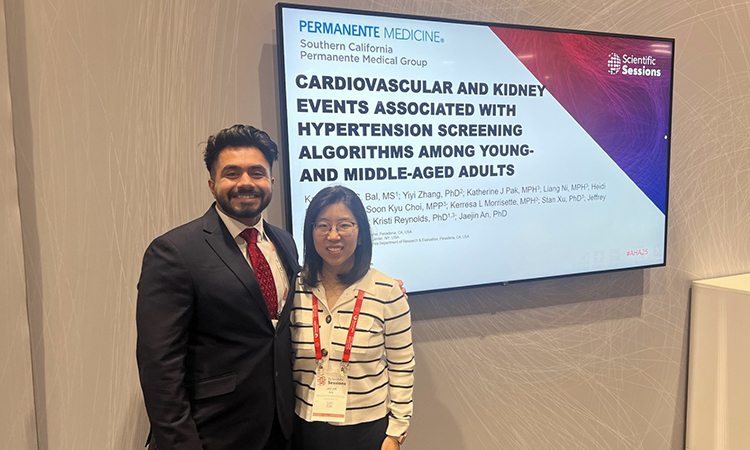
KPSOM student Kavenpreet Bal and Jaejin An, PhD, Assistant Professor of Health Systems Science at the conference in November.

KPSOM student Kavenpreet Bal and Jaejin An, PhD, Assistant Professor of Health Systems Science at the conference in November.

Kaiser Permanente Bernard J. Tyson School of Medicine students Michael Au and Kavenpreet Bal delivered research presentations at the American Heart Association 2025 Scientific Sessions, an international conference for advancements in cardiovascular science and medicine. They were accompanied at the event, held from November 7 through 10 in New Orleans, by faculty members Jaejin An, PhD, Assistant Professor of Health Systems Science; Hui Zhou, PhD, Assistant Professor of Health Systems Science; and Kristi Reynolds, PhD, Professor of Health Systems Science, all of whom are also affiliated with Kaiser Permanente Southern California Department of Research and Evaluation. 

"Presenting at the American Heart Association Scientific Sessions is an extraordinary accomplishment for students and reflects their strong commitment to advancing science,” said Dr. An. “Michael and Kaven’s research addresses critical issues in cardiovascular care, including equity, provider diversity, and culturally responsive treatment, factors that influence access and outcomes for diverse communities. Their presence at this international conference demonstrates the value of student contributions and the future of patient-centered research."
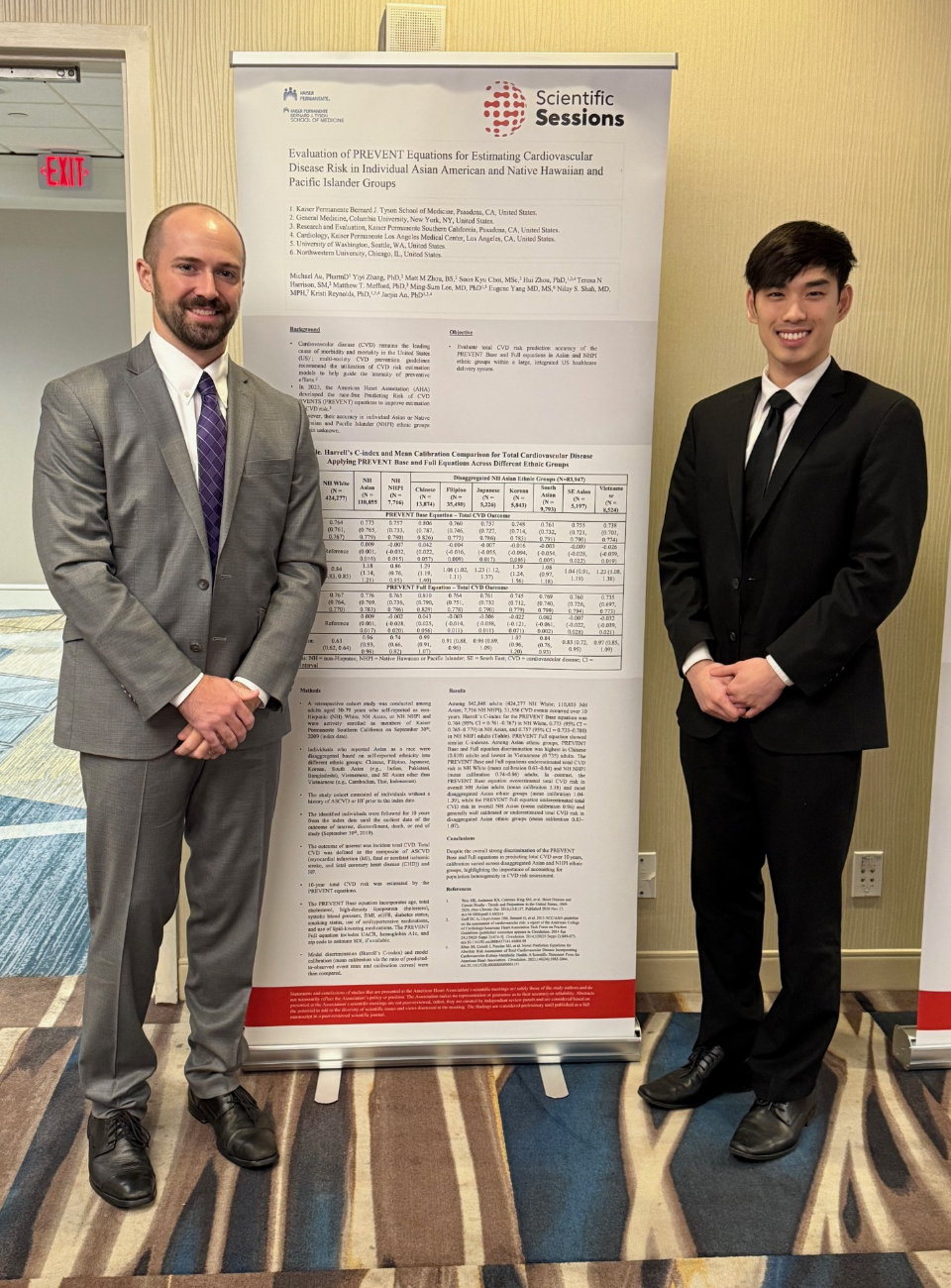

KPSOM student Michael Au and Matthew T. Mefford, PhD, of the Kaiser Permanente Southern California Department of Research and Evaluation at the conference.

KPSOM student Michael Au and Matthew T. Mefford, PhD, of the Kaiser Permanente Southern California Department of Research and Evaluation at the conference.

Michael Au presented two projects. His first study looked at whether people with an irregular heart rhythm called atrial fibrillation were more likely to start newer blood thinners when their doctor shared their race or language. The research, which included more than 59,000 adults, found that having a doctor of the same race was linked to higher use of these medications, while women, Black patients, and people living in poorer neighborhoods were less likely to receive them, highlighting how provider diversity and culturally responsive care may affect access to the best available treatments. 

Au’s second project evaluated a new American Heart Association tool that estimates a person’s chances of developing heart disease over 10 years. Following more than 540,000 adults without prior heart disease, the team found that the tool could generally tell who was more or less likely to develop problems, but its accuracy varied across different Asian American, Native Hawaiian, Pacific Islander, and White groups, suggesting that even “race-free” prediction tools may still need fine-tuning to better serve diverse communities. The manuscript from this work has been accepted for publication in JAMA Network Open and included collaborators from several major universities. 

Kavenpreet Bal’s presentation focused on high blood pressure in younger and middle-aged adults. His study compared different ways of defining and screening for high blood pressure to see how well they identified people who later experienced serious heart or kidney problems, such as heart attack, stroke, heart failure, or kidney failure. Across a large group of Kaiser Permanente Southern California members, all of the screening approaches flagged relatively small portions of the population but consistently identified people at much higher risk, supporting their use to catch problems earlier and guide timely follow-up care.