Events

A New Lease on Life

Celebrating a groundbreaking cure for sickle cell disease while raising awareness (Part 1 of 2)

September 03, 2026

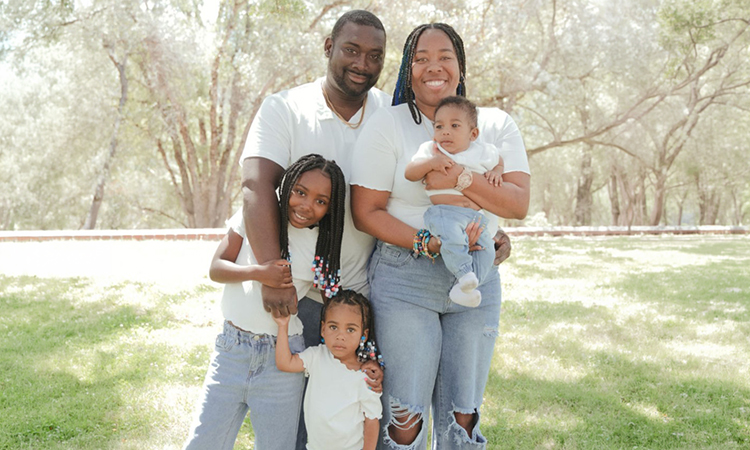
Donte Cofield with his family

Donte Cofield with his family

“The fact that I'm past [the age of] 35 and completely cured with no pain … miracle is overused, but I wanna use the word miracle,” said Donte Cofield, the first adult in Los Angeles County cured of sickle cell disease.

For Cofield, soon-to-be 36 and a married father of three, the cure has changed more than his health. It has changed how he thinks about the future. After a lifetime of pain, hospitalizations and uncertainty, he credits Kaiser Permanente’s Sickle Cell Center of Excellence and an innovative stem cell procedure made possible through Kaiser Permanente’s collaboration with City of Hope.

Sickle cell disease is an inherited blood disorder that affects more than 100,000 people in the United States and approximately 8 million worldwide, according to the National Heart, Lung, and Blood Institute. The disease changes the shape of red blood cells, which can block blood flow, reduce oxygen delivery and trigger severe pain crises and serious complications. It disproportionately affects Black and African American individuals.

For generations, care has focused on managing symptoms, improving quality of life and extending life expectancy. Now, gene therapy is making possible outcomes clinicians describe as a “functional cure” — when the disease no longer causes its defining symptoms, even as long-term follow-up continues.

Cofield spent much of his life expecting sickle cell disease to limit and possibly shorten his future. As a child, he often avoided sports and activities because of his condition. As a young man, he assumed he might not live past 30 or 40. After becoming a father, he began planning for a future he feared he would not see, from securing insurance to recording milestone birthday videos for his daughter.

The pain could be relentless. Cofield endured hospitalizations, medications, and flare-ups he compared to being hit in the back with a hammer. Weather such as extreme cold, heat, and altitude could all trigger complications. Over time, he said, he “grew to loathe [the disease]” and stopped believing a cure would arrive in his lifetime.

“I didn't have the faith to believe that [my disease] would be cured,” Cofield said. “And to be one of the first to be cured is insane for me … I can't describe it.”
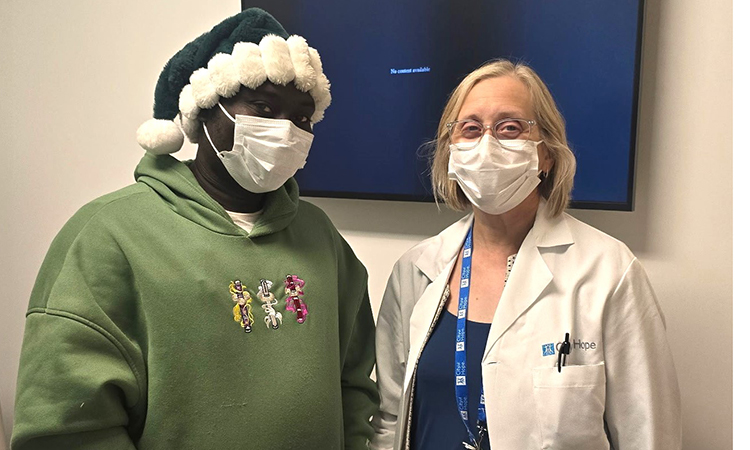
Donte Cofield and Dr. Pamela Becker

Donte Cofield and Dr. Pamela Becker

Cofield has been connected to Kaiser Permanente for much of his life, from pediatric care to adult sickle cell treatment. He credits several Kaiser Permanente clinicians with helping him reach this moment, including the late Elaine Smith, MD, a pediatric hematologist and former director of the Department of Pediatrics at Kaiser Permanente West Los Angeles; the late Manuel Myers, MD, former physician in charge at Kaiser Permanente’s Inglewood Medical Offices and co-founder of the Sickle Cell Program; Diane Batham, NP, a Kaiser Permanente nurse practitioner specializing in pediatrics-hematology/oncology; and Resa Caivano, MD, MPH, FAAP, one of Cofield’s physicians and a KPSOM Associate Professor of Health Systems Science.

Dr. Caivano is part of Kaiser Permanente’s Sickle Cell Center of Excellence in Inglewood, one of the few programs in the United States that treats adults with sickle cell disease. Developed more than 35 years ago to help address disparities in care, the program supports patients through one of the most difficult transitions—moving from pediatric to adult treatment.

“A lot of folks will leave a pediatric program and then sort of flounder while they try to find a hematologist or someone to take care of them, but our patients don't have that issue,” Dr. Caivano said.

Kaiser Permanente has long partnered with City of Hope to provide bone marrow harvesting and transplants to members. With gene therapy now available, Kaiser Permanente prepares and supports patients before treatment, while City of Hope provides the infrastructure for the stem cell procedure and post-procedure monitoring. Cofield was the first adult patient in the county to receive gene replacement treatment, and several other Kaiser Permanente adult patients are now in various stages of treatment and evaluation.

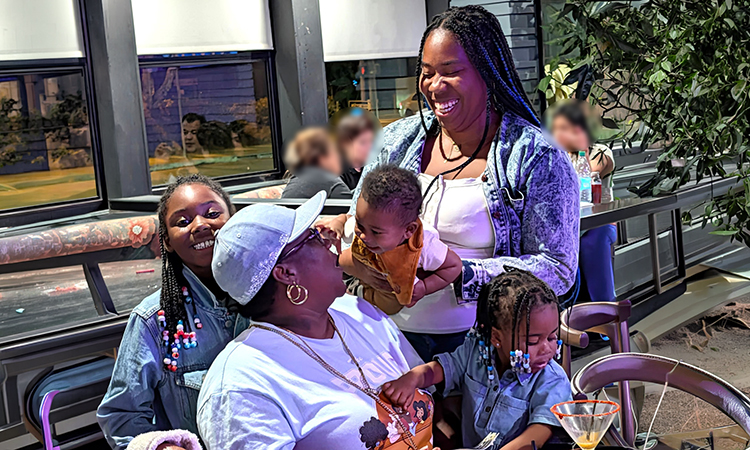
Donte Cofield’s mother, wife, and children

Donte Cofield’s mother, wife, and children

The cure has also brought new emotional terrain. Cofield and Dr. Caivano have discussed survivors’ guilt, changing relationships within the sickle cell community, and what it means to advocate for his young daughter, who also has sickle cell disease.

“When your whole entire life is built around this thing and then you don't have that, there is a sense of loss,” Dr. Caivano said. “How do you balance between having that sense of loss of something that defined you as a person and having this new lease on life?”

Cofield will share his story at “Sickle Cell Awareness and Education,” a September 9 event at Kaiser Permanente Bernard J. Tyson School of Medicine. The event will take place from 6 to 8 p.m. and include a reception and panel discussion moderated by Dr. Caivano. Cofield will be joined by Batham; Jerry Cheng, MD, a KPSOM Clinical Professor of Clinical Science; and Lisa Mueller, MD, a Kaiser Permanente Pediatric Hematology/Oncology specialist, who will highlight their work in sickle cell disease care. Those interested in the panel discussion  are invited to tune in virtually on September 9 at 7 pm via Zoom.